

Royal Mail Share Price
A crucial component of many investment portfolios, royal mail shares have had their ups and downs since they were privatized in 2013. However, the company remains a key player in the postal sector. Whether you’re considering investing in the company or already hold royal mail shares, it’s important to keep an eye on factors that impact its valuation and share price. In this article, we’ll look at what royal mail shares are called after privatization, who the major shareholder is, and a bit of history about the company’s share price.
After a series of corporate changes and rebranding efforts, the company now trades under the name International Distributions Services (IDS). The IDS share price offers investors an opportunity to gain exposure to legacy Royal Mail letter delivery operations within the UK as well as the GLS service that handles overseas parcel shipments. This repositioning was part of management’s initiative to highlight the company’s global transport capabilities and offset the decline in its traditional letter business, which is facing intense competition from online shipping companies.
However, the overall profitability of the company remains vulnerable to macro uncertainties and a number of other business challenges. Persistent declines in traditional letter revenues coupled with slowing growth in the company’s high-margin parcel shipment businesses have weighed on profits and investor confidence.
How Does the Royal Mail Share Price Live?
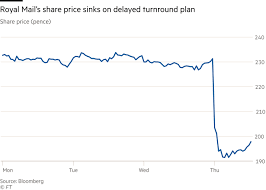
The royal mail share price live, like any publicly traded stock, is determined by a variety of factors that influence its value in real-time. As a prominent delivery and logistics company in the UK, Royal Mail’s stock price fluctuates based on the company’s performance, market conditions, and investor sentiment. To understand how the Royal Mail share price “lives” or changes over time, it’s crucial to examine the various elements that contribute to its price movements.
One of the most significant factors affecting the Royal Mail share price is its financial performance. The company regularly reports earnings, providing investors with key metrics such as revenue, operating profit, and customer demand. Positive financial results, such as increased profits or higher-than-expected revenue growth, typically lead to a rise in the share price as investors become more optimistic about the company’s future. On the other hand, poor performance, such as falling revenue or rising costs, can result in a decrease in the share price, as investors may become concerned about the company’s ability to maintain profitability.
In addition to financial performance, market conditions play a significant role in determining the Royal Mail share price. The broader economic environment, including inflation rates, interest rates, and consumer spending trends, can influence investor behavior. For example, during periods of economic uncertainty or recessions, investors may become more risk-averse, leading them to sell stocks like Royal Mail, which may cause a dip in share prices. Conversely, when the economy is performing well and consumers are spending more, Royal Mail’s stock price may rise due to increased demand for parcel delivery services.
The company’s ability to implement financial reforms while resolving entrenched disputes will ultimately determine the strength of its long-term recovery potential. Moreover, the company’s substantial debt load also leaves it susceptible to interest rate volatility and other economic shocks. This could result in significant volatility in the IDS share price.