

Technology is Transforming the Carbon Credit Market
The global carbon credit market is a complex one, but technology will likely play a crucial role in its future. From blockchain platforms to sophisticated climate change simulations, the right technologies can make it easier and faster for companies to comply with emission reduction regulations and meet sustainability goals.
As consumers and investors become increasingly environmentally conscious, they are demanding that companies produce high-quality products and services in a sustainable manner. These demands are fueling a growing demand for carbon credits, which can be used to offset emissions. In addition, many governments are implementing new regulations that require companies to reduce their carbon footprint or face penalties. This increased regulation is driving a significant increase in the demand for carbon credits, and it is expected to continue to drive growth in the market in the future.
The primary use for carbon credit market is through a process known as “cap and trade.” Under this system, regulators set a limit on the amount of carbon that can be emitted by an entity each year. Companies that emit less than their allotted quota can earn extra carbon credits that they can then sell to other entities that are above their cap. This allows both parties to stay within their respective emissions limits and encourages businesses to invest in more efficient operations. While this type of regulation is currently in place in most countries, a voluntary carbon credit market also exists.
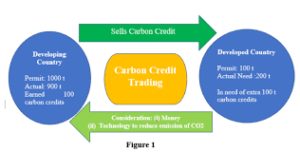
How Technology is Transforming the Carbon Credit Market
In this marketplace, companies may buy carbon credits to offset their emissions in exchange for financial incentives or as a way to demonstrate their commitment to sustainability. As a result, this market is growing rapidly. In fact, a recent report from Deloitte suggests that the carbon credit market will be worth more than US$100 billion by 2025.
Regardless of whether they are purchased on a voluntary or regulatory basis, these carbon credits will need to be tracked and verified. Luckily, technological advances are making it easier and more cost-effective for businesses to track, verify, and transfer carbon credits. For example, blockchain is being used to create carbon credit registries that provide a secure and transparent platform for tracking carbon credits. These registries can be linked to advanced climate models to assess the long-term impact of carbon credits.
Additionally, some organizations are using blockchain technology to create a carbon credit meta-registry that aggregates information into a single public database. This will help to reduce data siloes and ensure that all transactions in the market are transparent and auditable.
Furthermore, blockchain can be used to create smart contracts that allow for the secure creation and processing of credits and rights. This is particularly useful for carbon credits because it can eliminate the need to rely on third-party verification and settlement systems, which can be costly. Additionally, blockchain can be used to enable carbon credit buyers to purchase only high-quality credits.
As the carbon credit market continues to grow, it is important for financial institutions to have a clear strategy in place. Banks can help to foster the development of a robust carbon credit ecosystem by acting as key partners for new participants. As such, they can act as financial intermediaries to add liquidity, assist with pricing carbon-credit assets, and reduce counterparty risk in nascent trading platforms.